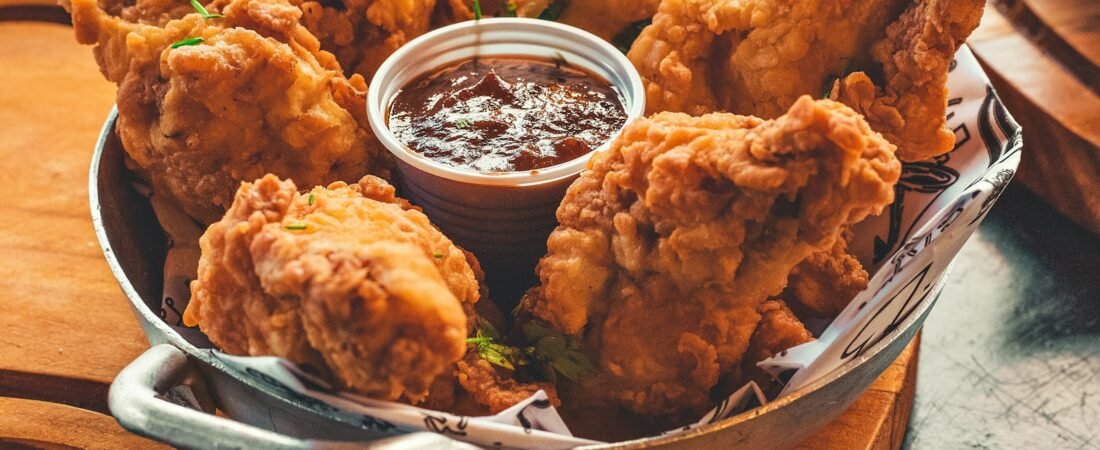
Korean fried chicken is not just American-style fried chicken with Korean sauce. In Korea, “chicken” (치킨) usually means a whole category of late-night food built around extra-crispy fried chicken, dozens of sauces, delivery, sharing and chimaek—the famous combination of chicken and beer.
If it is your first trip to South Korea, start with banban: half original fried chicken and half yangnyeom. You get the crisp, salty version and Korea’s sweet-spicy glazed version in one order without committing to a full chicken of either flavor.

What is Korean fried chicken?
Korean fried chicken—often simply called chikin (치킨) in Korea—is fried chicken developed into its own restaurant and delivery culture. The category includes plain crispy chicken, sweet-spicy yangnyeom, soy-garlic, cheese-seasoned chicken, extremely spicy versions and constantly changing franchise flavors.
One reason visitors notice the texture is that Korean chicken is commonly fried to emphasize a thin, crisp exterior rather than a thick breading. Cooking methods vary by restaurant, so “all Korean chicken is double-fried” is an oversimplification, but extra crispness is a defining expectation of the category.
What should you order first?
Order banban (반반): half fried, half yangnyeom. This is the safest first Korean chicken order because it gives you the two foundational styles.
Original fried chicken lets you judge the restaurant’s crust and seasoning. Yangnyeom adds the glossy red sauce that many international visitors associate with Korean fried chicken.
1. Fried chicken — 후라이드 치킨
This is the classic. No heavy sauce, just crunchy fried chicken with seasoning. If you normally prefer wings without sticky sauce, start here.
It is also the best style to eat immediately. Once sauce is added, even excellent fried chicken gradually loses some crispness.

2. Yangnyeom chicken — 양념치킨
Yangnyeom means seasoned or sauced. In the chicken context, it usually refers to fried chicken coated in a red sweet-spicy sauce. The flavor can combine gochujang-style heat, sweetness, garlic and savory notes, but recipes differ enormously by brand.
Do not assume the red color means it is extremely spicy. Many mainstream yangnyeom sauces are sweeter than first-time visitors expect.
3. Soy garlic chicken — 간장치킨
If you dislike spicy food, soy-garlic chicken is one of the safest choices. It tends to be savory, sweet and garlicky rather than chile-hot. The exact name varies—ganjang, soy garlic, garlic soy—but it is common across major chains.
4. Spicy Korean chicken
Korea also has chicken made specifically for people who want heat. Look for words such as 매운 (maeun, spicy) or descriptions referencing hot peppers. Do not use Buldak ramen as your universal spice scale: a restaurant’s “spicy” chicken can be dramatically milder or hotter depending on its sauce.
If Korean spice levels worry you, KriMind’s Least Spicy Buldak Guide gives useful context for another famous Korean spicy-food category.
5. Cheese and powder-seasoned chicken
Korean chains helped popularize fried chicken tossed in flavored seasoning powders, including cheese-style, onion and sweet-savory combinations. These can surprise Americans because the seasoning may taste sweeter and more snack-like than conventional U.S. fried chicken.
What does “banban” mean?
Banban (반반) literally means half-and-half. At a chicken restaurant, it usually means splitting one order between two flavors. The classic combination is fried + yangnyeom.
You can ask: “Banban dwaeyo?” (반반 돼요?)—“Can I get half-and-half?” Not every menu allows every possible flavor combination, so point to the two options you want.
What is chimaek?
Chimaek (치맥) combines chikin (chicken) and maekju (beer). It describes the Korean habit of eating fried chicken with beer, particularly as an evening meal, social gathering or sports-viewing food.
The term became internationally recognizable through Korean pop culture, but in Korea the combination is ordinary enough that chicken restaurants frequently build beer directly into the dining experience.

Why is Korean fried chicken so popular?
It is not one reason. Korea has a dense delivery culture, intense franchise competition, a strong evening food culture and consumers accustomed to constant menu innovation. Chicken fits all of those conditions: it travels reasonably well, feeds multiple people and can be reinvented with sauces and seasonings.
The Korea Tourism Organization describes chimaek as a representative Korean food experience and has promoted chicken-and-beer culture to international visitors. Korean dramas and other Korean media helped carry the idea overseas.
Best Korean chicken brands tourists will see
You will encounter many chains, and there is no single objective “best.” BBQ Chicken, bhc, 교촌치킨 (Kyochon), 굽네치킨 (Goobne), 네네치킨 (Nene) and 푸라닭 (Puradak) are among recognizable names.
The useful strategy for a traveler is not to spend two hours finding the internet’s #1 franchise. Pick a busy branch near your hotel, then choose a signature flavor. Branch quality, freshness and how long the chicken sits before you eat it can matter as much as the logo.
Kyochon: what should you order?
Kyochon is particularly associated with soy-garlic and red spicy styles. It is a good option for travelers who want thinner, sauce-coated pieces rather than a giant heavily breaded American-style chicken.
bhc: why tourists recognize it
bhc became famous for flavors such as Bburinkle, a powder-seasoned chicken with a sweet-savory cheesy profile. It is a good example of how Korean chicken moved beyond original-versus-spicy into flavors that resemble snack seasonings.
BBQ Chicken: not American barbecue
The “BBQ” in the Korean chicken brand should not make you expect smoked brisket or American barbecue sauce. It is a major Korean chicken franchise with a large menu of fried and sauced chicken.
Goobne: the baked/roasted alternative
Goobne is known for oven-roasted rather than conventionally deep-fried chicken. If your group wants Korean chicken culture but someone does not want a typical fried order, it can be a useful alternative.
Bone-in vs boneless Korean chicken
Many menus let you choose bone-in or boneless, but the meat cut and texture can differ by brand. Do not assume “boneless” always means the exact same white-meat chicken tenders common in the U.S. Korean boneless chicken can use different cuts depending on the restaurant.
For maximum classic chicken texture, choose bone-in. For easy sharing, drinking or eating in a hotel, boneless is convenient.
What are the white cubes served with Korean chicken?
They are chicken-mu (치킨무): pickled white radish. The cool, sweet-sour crunch cuts through the grease and sauce between bites. It is such a standard companion that many Korean delivery orders include it automatically.
Do Koreans eat chicken with rice?
Usually Korean fried chicken is treated as its own meal, snack or drinking food rather than being automatically served over rice. Some restaurants have rice dishes or sides, but a classic chicken order commonly arrives with chicken-mu and possibly sauces—not a bowl of rice for every person.
How much chicken should two people order?
A whole chicken order is commonly designed for sharing and can be enough for two people, particularly with sides and drinks. Portion sizes differ by brand, bone-in versus boneless choice and appetite.
If you want to sample several foods on the same night, avoid ordering multiple full chickens just because the menu photographs make every flavor look good.
How much does Korean fried chicken cost?
Prices vary by chain, neighborhood, flavor, delivery fees and sides. Major franchise whole-chicken menus commonly sit around the ₩20,000 range and can go higher for premium flavors or sets. Check the current menu rather than relying on an old blog price—Korean chicken prices have changed repeatedly over time.
Eating chicken at a restaurant vs delivery
Dine-in gives you the best chance of eating the crust at peak crispness and makes chimaek easy. Delivery gives you the classic Korean at-home experience but can be harder for a tourist without a Korean phone number or local payment setup.
KriMind’s Korea Food Delivery Without a Korean Phone Number explains the practical problem international travelers run into.

Can tourists order Korean chicken without speaking Korean?
Yes. Major chains often have menu photos, kiosks or delivery listings that make flavor selection easier. In a restaurant, pointing to a menu item is completely normal.
Useful Korean:
후라이드 하나 주세요. (Huraideu hana juseyo.) — One fried chicken, please.
양념 하나 주세요. (Yangnyeom hana juseyo.) — One yangnyeom chicken, please.
반반 돼요? (Banban dwaeyo?) — Can I get half-and-half?
안 매운 거 있어요? (An maeun geo isseoyo?) — Do you have something not spicy?
Is Korean fried chicken halal?
Do not assume a chicken restaurant is halal simply because chicken is the main meat. Ingredients, slaughter certification, sauces, cooking oil and shared equipment all matter. If halal compliance is important, verify the specific branch or seek a restaurant with recognized halal certification.
Is Korean fried chicken gluten-free?
Usually you should assume no unless the restaurant explicitly says otherwise. Batter, starch mixtures, soy sauce and shared fryers can contain or contact gluten. Travelers with celiac disease should not infer safety from the thin crust.
Is Korean chicken very spicy?
No. Korean chicken is a category, not one flavor. Original fried chicken can have essentially no chile heat, soy-garlic is commonly mild, standard yangnyeom is often sweet-spicy, and dedicated hot flavors can be genuinely intense.
Where should a tourist eat Korean chicken?
You do not need a “tourist-famous” restaurant. Seoul neighborhoods such as Hongdae, Myeongdong, Gangnam, Jongno and areas around major universities have many chicken shops. The same is true in Busan, Suwon and other cities.
For a first trip, choose a convenient branch with good recent local reviews, then spend the saved travel time exploring the neighborhood. Use Naver Map rather than relying only on Google Maps in Korea.
Korean fried chicken vs American fried chicken
The comparison is less about which is better and more about the eating style. American fried chicken often foregrounds seasoned breading and individual pieces. Korean chicken culture emphasizes crispness, sharing, sauce variety, delivery and the social ritual around the meal.
That is why trying only one plain drumstick does not fully explain the Korean experience. Try original and a sauced version together.
What else should first-time Korea visitors eat?
Chicken should be one stop, not your entire food itinerary. Try kimchi in different contexts, Korean barbecue, convenience-store food, street food, soups and regional dishes. Start with KriMind’s Korean BBQ Beginner’s Guide, Kimchi Beginner’s Guide and Korean Convenience Store Guide.
FAQ
What is Korean fried chicken called in Korea?
People commonly say 치킨 (chikin), the Korean pronunciation of “chicken,” when referring to the fried-chicken food category.
What is the most popular Korean chicken flavor?
Original fried and yangnyeom are the foundational choices. Soy-garlic and brand-specific flavored chicken are also extremely common.
What should a beginner order?
Get banban: half original fried chicken and half yangnyeom. It is the easiest way to understand the classic contrast.
What does chimaek mean?
Chimaek combines “chikin” (chicken) and “maekju” (beer), meaning fried chicken eaten with beer.
Is Korean fried chicken always double-fried?
No. Double frying is associated with Korean fried chicken, but cooking techniques differ by restaurant and brand. The more accurate defining trait is the emphasis on a crisp exterior and varied sauces.
Is Korean fried chicken spicy?
Not necessarily. Original and many soy-garlic styles are mild. Yangnyeom is usually sweet-spicy, while dedicated hot flavors can be much hotter.
Sources
Korea Tourism Organization — VisitKorea
Kyochon Official
bhc Official
BBQ Chicken Korea Official
Want to eat like a local in Korea?
Subscribe for practical Korean food, neighborhoods, transportation and travel guides from KriMind.
Enter your email below to join KriMind.