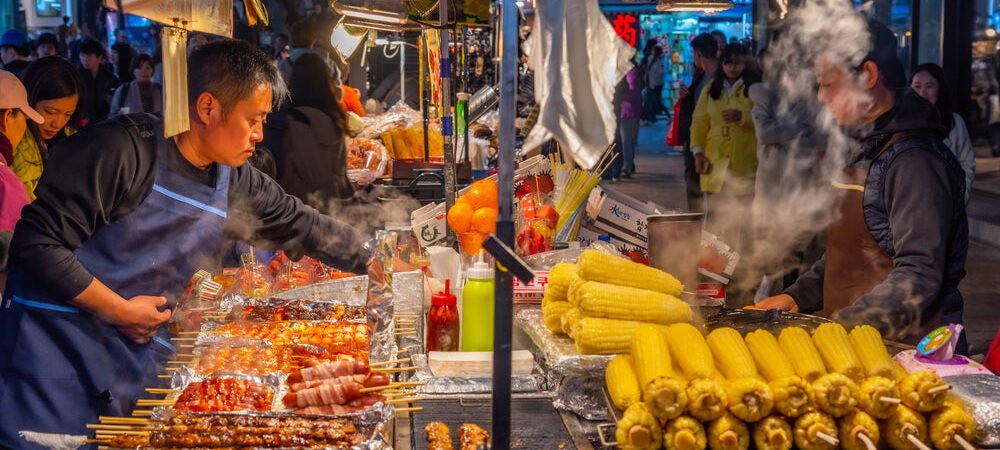
If you only have one night to explore Korean street food, order tteokbokki, eomuk, gimbap, one fried snack, and either hotteok or bungeoppang for dessert. That combination gives a first-time visitor the spicy, savory, crispy, brothy and sweet sides of Korea’s everyday snack culture without buying twenty random dishes.
Korean street food is bigger than Myeongdong. It includes traditional markets, neighborhood bunsik shops, seasonal carts and late-night stalls. This guide covers 20 foods worth knowing, what they taste like, which ones are spicy, where to try them in Seoul and Busan, and how to order without speaking Korean.
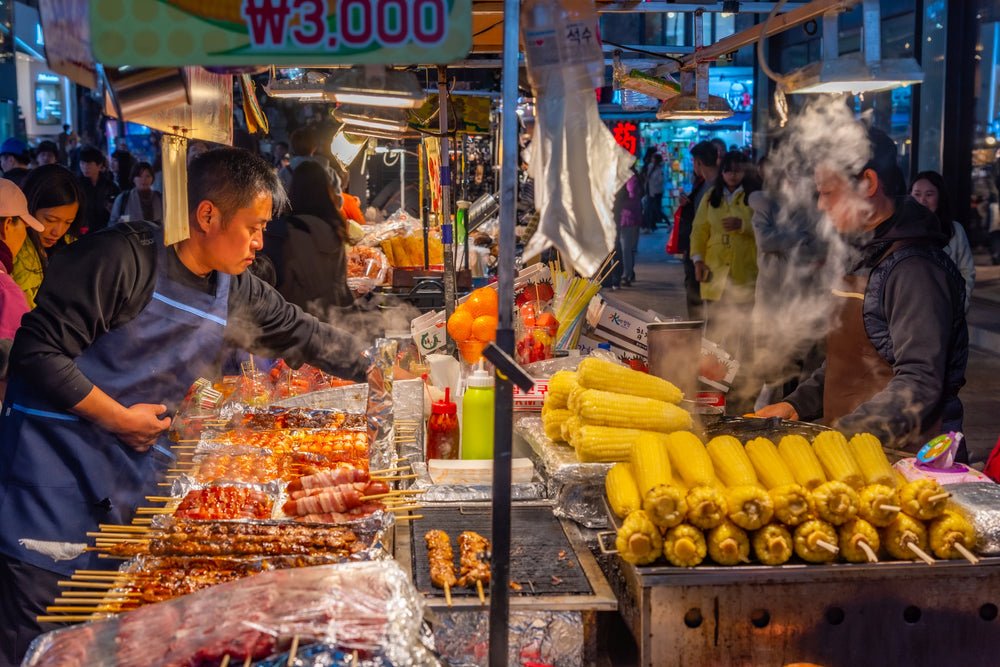
What is Korean street food?
In Korea, many quick everyday snacks fall under bunsik (분식). The Korea Tourism Organization lists tteokbokki, fried foods, sundae, gimbap and fish cakes among the foods visitors commonly encounter, while seasonal snacks include bungeoppang and hotteok.
The useful distinction for travelers is that “street food” does not always mean a cart literally standing on a sidewalk. You may eat the same foods at a traditional-market stall, a tiny neighborhood bunsik restaurant, a subway-area counter or a modern franchise.
1. Tteokbokki (떡볶이) — the essential first bite
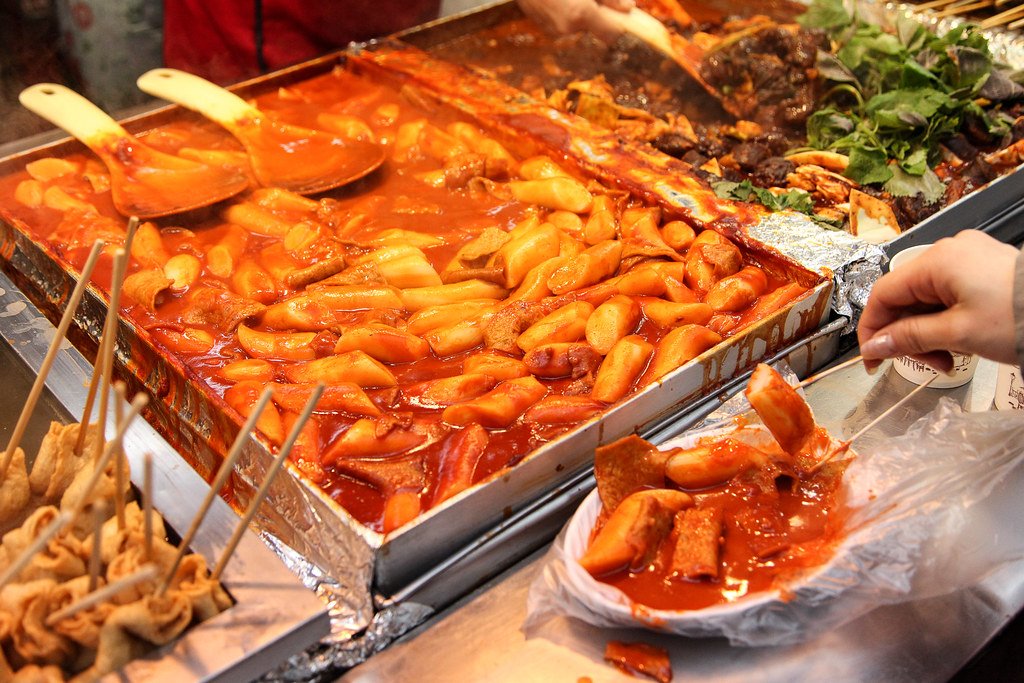
Tteokbokki is chewy rice cake cooked in a red, usually sweet-spicy sauce. It is one of Korea’s representative street foods. Fish-cake sheets are commonly mixed into the sauce, and modern versions include cheese, rosé, jjajang and rabokki with instant noodles.
For an American first-timer, the texture is as important as the heat. The cylindrical rice cakes are dense and chewy rather than bread-like. Standard market tteokbokki can be genuinely spicy, but the level changes dramatically by vendor.
2. Eomuk (어묵) — fish cake on a skewer
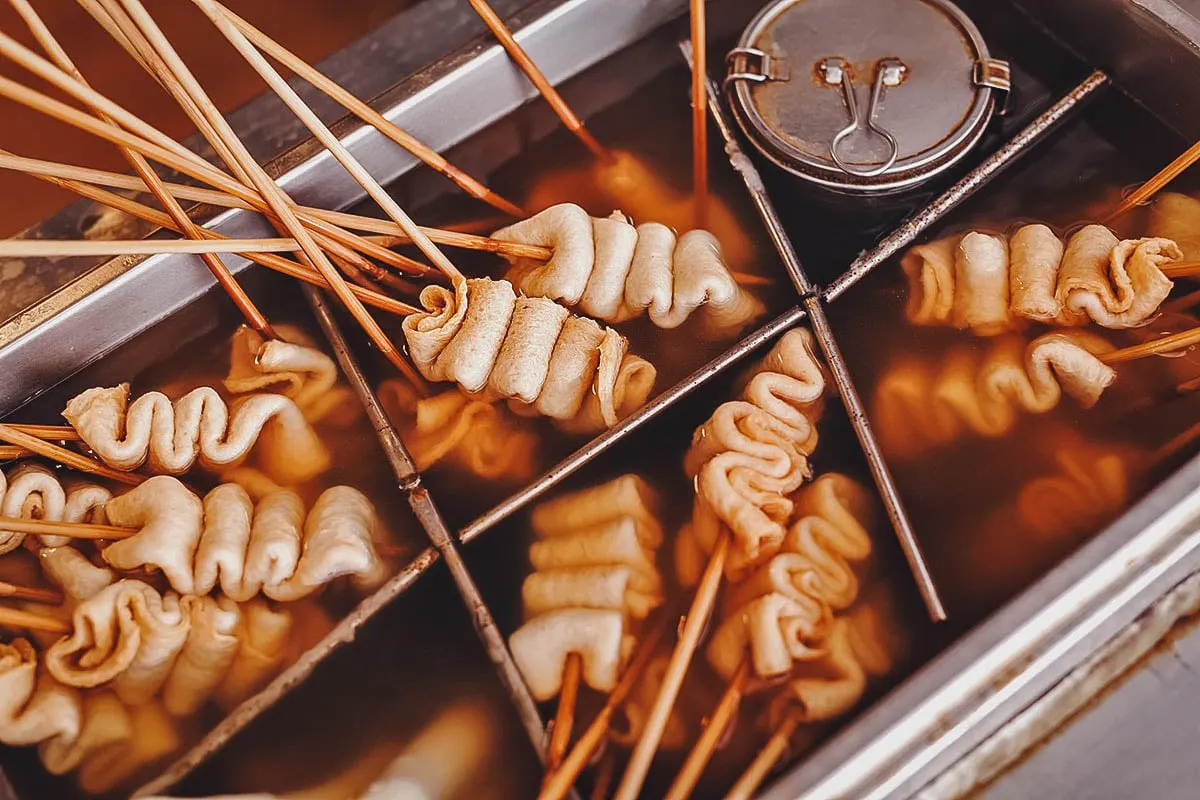
Eomuk is Korean fish cake, commonly folded onto a wooden skewer and kept hot in a savory broth. You may also hear people call it odeng. On a cold day, the broth is almost as important as the fish cake itself.
If tteokbokki is too spicy, take a bite of eomuk between bites. The combination is one of the easiest ways to understand how Koreans actually eat at a bunsik stall rather than treating every item as an isolated tasting.
3. Gimbap (김밥) — Korea’s portable rice roll
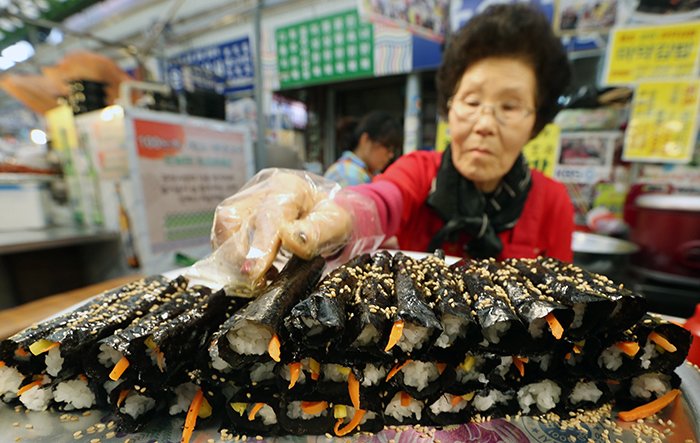
Gimbap wraps seasoned rice and fillings in dried seaweed. Common fillings include pickled radish, egg, carrot, spinach, ham, tuna and other vegetables or proteins. It is portable, filling and usually mild.
Do not describe it simply as “Korean sushi.” The rice seasoning, fillings and eating context are different. In Korea, gimbap is picnic food, convenience food, a quick meal and an ideal partner for tteokbokki sauce.
4. Sundae (순대) — not an ice-cream sundae
Korean sundae is a sausage, commonly made with pig intestine filled with ingredients that can include glass noodles, blood and vegetables. It is sliced into thick rounds and usually served with a regional dipping seasoning.
The flavor is milder than its English description may make you imagine. If you enjoy blood sausage or black pudding, it should be high on your list. If offal is outside your comfort zone, share one order rather than buying a full plate for yourself.
5. Twigim (튀김) — Korean-style fried snacks
Twigim simply refers to fried foods. At a bunsik shop, you might see fried squid, sweet potato, vegetables, shrimp, seaweed rolls or dumplings. A classic move is to dip the fried pieces into tteokbokki sauce.
Travelers with shellfish allergies or gluten restrictions should be cautious: assorted items can share batter, utensils and frying oil.
6. Hotteok (호떡) — hot sugar-filled pancake
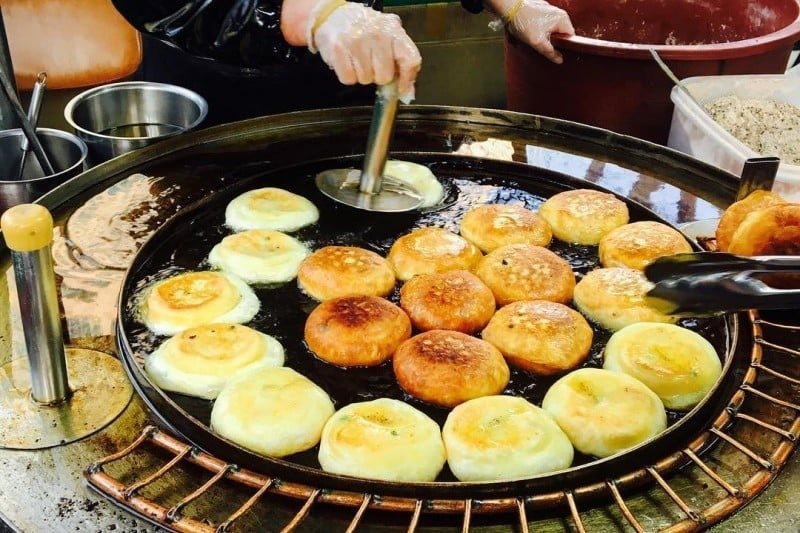
Hotteok is one of Korea’s great cold-weather snacks: a dough pancake cooked on a griddle with a hot filling commonly built around brown sugar, cinnamon and nuts or seeds. The inside can become almost molten, so the first bite deserves patience.
Busan is particularly famous for seed-filled ssiat hotteok, while Seoul markets have many versions of the classic sweet pancake.
7. Bungeoppang (붕어빵) — the fish-shaped winter pastry
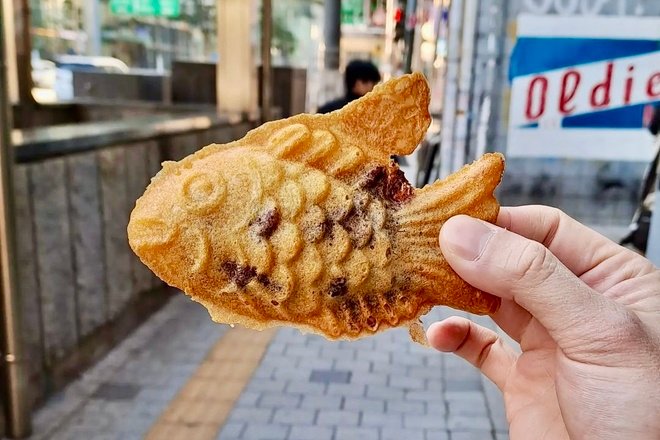
Bungeoppang looks like a small fish but normally contains no fish. It is a fish-shaped pastry traditionally filled with sweet red-bean paste. Custard and other modern fillings are also common.
This is strongly seasonal. You are much more likely to encounter street vendors during colder months, which is why winter travelers often remember it more vividly than summer visitors.
8. Gyeranppang (계란빵) — egg bread
Gyeranppang is a small sweet-savory bread baked with an egg. It is easy for a cautious eater because there is no major spice barrier and the ingredients are visually straightforward.
You will often see it on tourist-oriented street-food lists, but availability changes by district and season. Do not build an entire itinerary around finding one exact cart.
9. Dak-kkochi (닭꼬치) — chicken skewers
Dak-kkochi is grilled chicken on a skewer, usually brushed with a sweet-savory or spicy sauce. It is one of the most accessible Korean street foods for visitors who want familiar ingredients before trying sundae or seafood.
10. Dakgangjeong (닭강정) — crispy sweet-spicy chicken
Dakgangjeong is bite-size fried chicken coated in a sticky glaze. It overlaps with Korea’s broader fried-chicken culture but works especially well as market food because it can be served in a cup or small box.
If chicken is your priority, see KriMind’s complete Korean Fried Chicken Guide for yangnyeom, soy garlic, chimaek and major brands.
11. Korean corn dog (핫도그)
Korean corn dogs became internationally famous for mozzarella pulls, potato-coated exteriors, sugar dusting and sauces. In Korea, hot dog can refer to this battered stick snack rather than only an American-style sausage in a bun.
They are fun, photogenic and filling—but if you have only one market meal, do not let one giant cheese corn dog crowd out the older Korean street-food classics.
12. Mandu (만두) — dumplings
Mandu can be steamed, boiled or fried, with meat, kimchi or vegetable fillings. Market dumplings make a useful mild item to share alongside spicy tteokbokki.
13. Bindaetteok (빈대떡) — mung-bean pancake
Gwangjang Market is especially associated with thick, crispy mung-bean pancakes. They are ground, griddled in oil and served hot, often as a savory snack with drinks.
If you go to Gwangjang and eat only foods that you could buy from any modern franchise, you miss part of the reason to visit. Bindaetteok is one of the market-specific classics worth prioritizing. Seoul’s official tourism guide also highlights the market’s mung-bean pancakes and small gimbap.
14. Kkoma gimbap (꼬마김밥) — Gwangjang’s tiny rolls
Gwangjang’s bite-size rolls have long been known by the nickname “mayak gimbap,” referring to their supposedly addictive taste. Seoul has increasingly used the more neutral name kkoma gimbap, meaning small gimbap.
They are simple, compact and easy to share, often paired with a mustard-style dipping sauce.
15. Rabokki (라볶이)
Rabokki combines ramen noodles with tteokbokki. It is heavier than plain tteokbokki and can turn a snack into a real meal. If your group plans to sample six other foods afterward, one order is plenty to share.
16. Tornado potato (회오리감자)
A whole potato is spiral-cut onto a skewer, fried and seasoned. It is more modern festival/night-market food than old-school bunsik, but it remains instantly recognizable and easy for children or cautious eaters.
17. Roasted sweet potato (군고구마)
Gun-goguma is roasted sweet potato, a simple cold-weather snack with deep nostalgic associations in Korea. It is naturally sweet and an excellent break from fried or chile-heavy foods.
18. Hoppang (호빵)
Hoppang is a warm steamed bun sold with fillings such as red bean, vegetables or pizza-style mixtures. Like bungeoppang, it becomes especially visible when the temperature drops.
19. Tteok-kkochi (떡꼬치)
Rice cakes are skewered, fried or grilled and coated with a sweet-spicy sauce. Think of it as a handheld cousin of tteokbokki with a different exterior texture.
20. Busan bibim-dangmyeon (비빔당면)
Street food changes by region. At Busan’s Gukje and Bupyeong areas, look beyond Seoul’s standard list. Bibim-dangmyeon—glass noodles mixed with spicy seasoning—is one local market food highlighted by the Korea Tourism Organization. Busan’s markets are also strong for eomuk and ssiat hotteok.
The best first Korean street-food order
For two people, a smart first order is one tteokbokki + several eomuk skewers + one gimbap + a small assortment of twigim. Share everything. Then add hotteok or bungeoppang as dessert if you find a good stall.
This is better than immediately buying five heavy fried dishes because each item plays a different role: spicy sauce, broth, neutral rice, crunch and sweetness.
Where to eat Korean street food in Seoul
Gwangjang Market
Best for a traditional-market food experience. Prioritize bindaetteok, small gimbap, tteokbokki and other stall foods. The official Seoul guide describes Gwangjang as a central, historic market packed with traditional food stalls.
Myeongdong
Best for convenience and variety for a first-time tourist. Expect visually dramatic, tourist-friendly foods and easy browsing. It is not the place to judge every Korean street-food price nationwide.
Namdaemun Market
A useful combination of shopping, market alleys and food near central Seoul. It works well if you want street food as part of sightseeing rather than a dedicated food-only trip.
Mangwon Market
A neighborhood-market alternative. The Korea Tourism Organization specifically highlights fried peppers, hotteok, croquettes, dakgangjeong, gimbap and tteokbokki among Mangwon’s foods.
Where to eat street food in Busan
Busan adds a coastal and regional layer. Gukje Market is known for foods including Chungmu gimbap, tteokbokki and bibim-dangmyeon, while nearby Bupyeong Kkangtong Market is a strong night-market option. Haeundae Market also gives beach-area travelers an easy way to try tteokbokki, gimbap, twigim, mandu, sundae and eomuk.
Is Korean street food cheap?
Traditionally, affordability is part of bunsik culture, but there is no single “street-food price.” Tourist districts, traditional markets, ingredients and portion sizes vary. The safest 2026 advice is simple: look at the displayed price before ordering and do not assume an old YouTube video’s ₩1,000 price still applies.
Cash or card?
Korea is highly card-oriented, and many permanent market shops accept cards, but a small street vendor may have different payment options. Carrying some Korean won is useful for markets and temporary carts. Ask “카드 돼요?” (Kadeu dwaeyo?)—“Can I pay by card?”—before ordering if you are unsure.
How to order Korean street food
You do not need fluent Korean. Pointing at the food and holding up a number is normal. Useful phrases are:
이거 하나 주세요. (Igeo hana juseyo.) — One of this, please.
안 매운 거 있어요? (An maeun geo isseoyo?) — Do you have something not spicy?
얼마예요? (Eolmayeyo?) — How much is it?
카드 돼요? (Kadeu dwaeyo?) — Do you take cards?
Vegetarian, halal and allergy warning
Street food requires more caution than the appearance suggests. Tteokbokki often contains fish cake and its sauce or stock may contain animal or seafood ingredients. Eomuk is fish. Gimbap can contain egg, ham, tuna or imitation crab. Sundae can contain blood and intestine. Fried foods may share oil.
If you have a severe allergy, halal requirements, celiac disease or strict vegetarian/vegan requirements, do not rely on appearance or a translation app alone. Ingredient lists at small stalls may be limited.
What is the least spicy Korean street food?
Start with gimbap, eomuk, gyeranppang, mandu, hotteok or bungeoppang, while still checking fillings and sauces. Standard red tteokbokki is the obvious item to approach cautiously if you do not tolerate chile heat.
What should you eat in winter?
Winter is arguably the most atmospheric street-food season. Hot eomuk broth, bungeoppang, hotteok, roasted sweet potatoes and hoppang all make more sense when Seoul is cold. VisitKorea specifically features eomuk, bungeoppang and hotteok among Korea’s winter favorites.
If you are planning a late-fall trip, pair this guide with Korea Weather in November 2026 and the South Korea Packing List.
Street-food mistakes first-time tourists make
Ordering too much at the first stall: share and keep moving. Assuming every red dish has the same spice level: it does not. Expecting every famous food year-round: some snacks are seasonal. Ignoring regional specialties: Busan is not simply Seoul with a beach. Using only Google Maps: use Naver Map in Korea to find current market locations and routes.
Build a Korean food itinerary from here
Street food should connect to the rest of your Korea food trip. Continue with KriMind’s Korean Fried Chicken Guide, Korean BBQ Beginner’s Guide, Kimchi Guide and Korean Convenience Store Guide.
FAQ
What is the most famous Korean street food?
Tteokbokki is one of the most representative and recognizable. Gimbap, eomuk, sundae, twigim, hotteok and bungeoppang are also core foods.
Is Korean street food spicy?
Some of it is. Tteokbokki can be spicy, but gimbap, eomuk, hotteok, bungeoppang and many dumplings can be mild.
Where is the best street food in Seoul?
Gwangjang Market is excellent for traditional market foods; Myeongdong is convenient for first-time visitors; Namdaemun and Mangwon offer different market experiences.
What should I try at Gwangjang Market?
Bindaetteok and small gimbap are signature choices, then add other foods depending on appetite.
What is the best Korean winter street food?
Bungeoppang, hotteok and hot eomuk are classic cold-weather choices.
Can I pay by credit card?
Many permanent shops accept cards, but payment options vary at small stalls. Carry some won and ask “Kadeu dwaeyo?” if needed.
Sources
Korea Tourism Organization — Bunsik & Street Food
VisitKorea — Winter Street Food
Visit Seoul — Gwangjang Market
VisitKorea — Gukje Market Food Street
Hungry for Korea?
Subscribe for practical Korean food, Seoul neighborhoods, transportation and local travel guides from KriMind.
Enter your email below to join KriMind.