Quick answer: In many Korean cushion foundation lines, shade 21 is lighter than shade 23. But these numbers are not standardized across brands: one brand’s 21 can look different from another brand’s 21. To choose correctly, compare both depth (how light or deep the shade is) and undertone (pink, neutral, yellow or golden), then test along your jawline in natural light.
Shopping for Korean makeup in 2026? This guide explains 21 vs. 23, labels such as 21N and 23C, and how to avoid buying a cushion that looks too pale, gray or orange.
What do 21 and 23 mean in Korean cushion foundation?
Korean makeup brands commonly use shade numbers such as 17, 21, 23, 25 and 27. Within a single product line, lower numbers generally represent lighter colors, and higher numbers represent deeper colors. Shade 21 is often in the light range, while 23 is typically a step deeper. These are conventions, not an international color standard.
For a concrete example, HERA’s official Korean cushion catalog lists Black Cushion shades including 21N1 Vanilla and 23N1 Beige, as well as cool-toned variations. Do not assume the same numbers will match perfectly in CLIO, TIRTIR, or another brand.
21 vs. 23: which shade should you start with?
- Start by checking 21 if your current foundation is light and typically matches your neck without looking chalky.
- Start by checking 23 if 21 looks visibly pale on your jawline or you usually wear a slightly deeper light-to-medium base.
- Try both if you are between shades. A thin swatch of each along your jaw is more useful than testing only on your hand.
- Look beyond 23 if both options are too light. Some Korean cushion lines offer a much wider shade range; you do not have to force a 21 or 23 match.
What do C, N and W mean in Korean makeup?
Some brands add letters for undertones: C commonly signals cool or pink-leaning shades, N neutral, and W warm or yellow-leaning shades. These labels are brand-specific, so verify the brand’s official swatches rather than treating the letters as a universal system.
For example, 21C and 21N may have similar overall depth but look different on the skin because their undertones differ. A foundation that is the right depth can still look ashy or orange if its undertone is wrong.
How to test cushion shades in a Korean beauty store
- Find the official shade display. Use the tester for the exact cushion formula you want, not a different product with the same shade number.
- Compare adjacent options. Apply a small amount of 21 and 23 near the jawline if testers and store hygiene rules permit.
- Compare against your neck. Avoid judging only by the back of your hand, which may be a different color from your face.
- Wait for the formula to settle. Check the result after it dries; some products change appearance as they set.
- Check in natural-looking light. Strong store lighting and phone beauty filters can distort color.
- Choose the shade that disappears into your skin. The goal is a seamless face-to-neck transition, not automatically the palest finish.

Buying a Korean cushion online without a tester
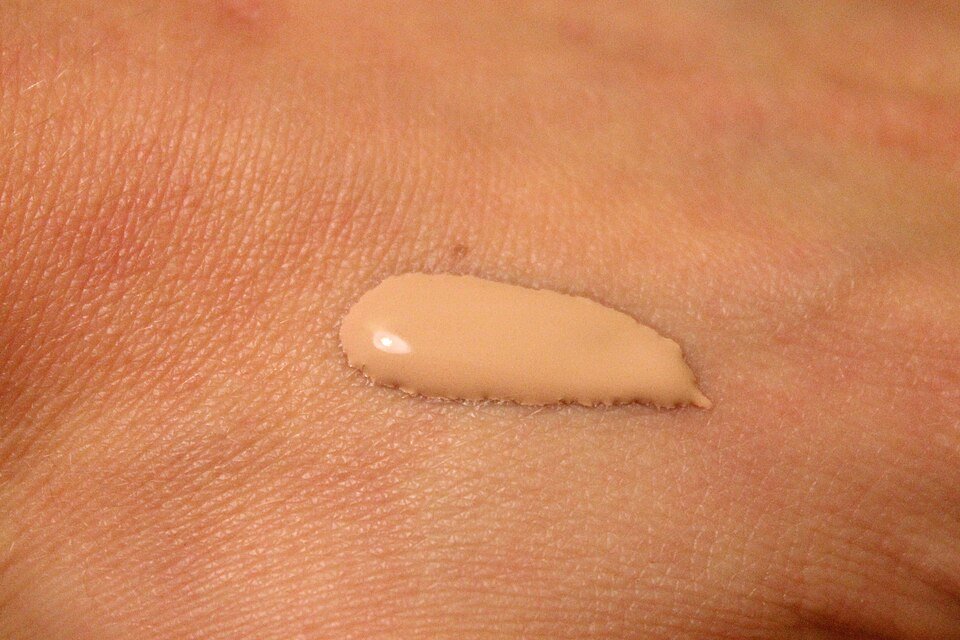
Start with the official shade chart for the exact formula, then compare product swatches photographed on skin tones similar to yours. If you already use a Western foundation, use its description of your depth and undertone as a starting point, not as a guaranteed conversion. A matching shade name in another brand may not be equivalent.
Look for return and exchange policies before ordering. Opened cosmetics may be subject to restrictions, depending on the retailer.
Common mistakes American shoppers make
- Assuming 21 is the “standard Korean shade” for everyone. It is only one depth in a brand’s range.
- Buying 23 solely because it sounds like “medium.” A 23 may still be too light for your skin.
- Ignoring undertone. Two foundations can be equally light but visibly different in pink or yellow tones.
- Matching from compact packaging. The case color does not reveal the actual foundation shade.
- Assuming cushion SPF replaces sunscreen. Apply a dedicated sunscreen as directed when sun protection is needed; typical makeup application may not provide the labeled protection.
FAQ: Korean cushion shade 21 vs. 23
Is 21 lighter than 23?
Generally yes, within the same brand and formula. The difference between brands is not standardized.
Is 21N the same as 21C?
No. The number may indicate a similar depth, but the undertone label differs. Check the brand’s shade chart.
Does shade 23 suit every medium skin tone?
No. Many people need a deeper shade or a different undertone. Use an extended-range product when 23 is too pale.
Should I pick a lighter cushion for a Korean makeup look?
Not necessarily. Choosing a base significantly lighter than your neck can create a visible mismatch. You can achieve a radiant finish without deliberately choosing the wrong shade.
Can I match a cushion shade using a selfie?
A selfie may help narrow options, but lighting, white balance and filters make it unreliable as a final color match. Real-life swatching is better when possible.
More KriMind beauty guides
Explore KriMind Korean beauty guides and our Olive Young shopping guide for more practical buying advice.
Get Korean beauty tips by email
Subscribe to KriMind for easy Korean makeup, skincare and shopping guides written for international readers.
Enter your email below to subscribe.
Keep exploring Korea: related guides
These practical KriMind guides are worth reading next:
- Korean four-cut photo booths for beauty and style lovers →
- How to pay at Korean unmanned shops and kiosks →
- Oppa, unnie, hyung and noona: essential Korean words →
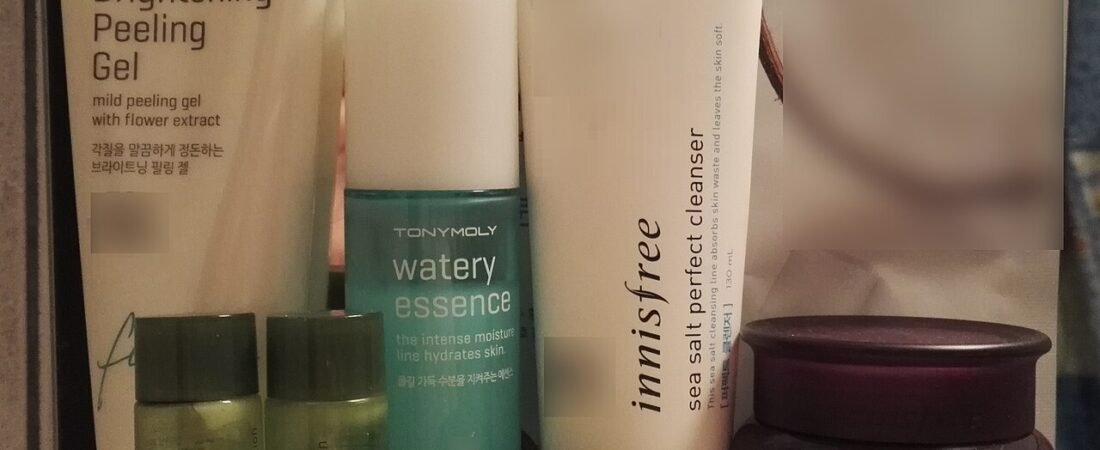
Sources: HERA Korea official cushion catalog; Keauty shade selection guide. Featured image: Teemeah, Korean cosmetics on a shelf, CC BY-SA 4.0, shown unaltered. Updated October 2026.
