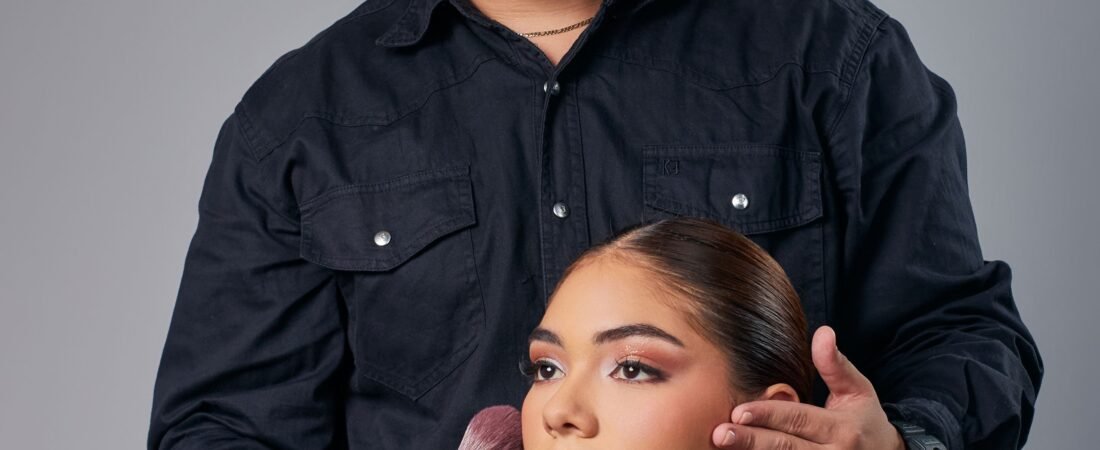
Short answer: K-pop styling does not need to force every idol into a fixed “round,” “oval,” or “heart” label. A more useful approach is to look at proportions—face length, cheek width, jaw width, forehead balance, and eye direction—and see how hair and makeup shift the visual emphasis.
Why are simple face-shape labels limited?
Most faces do not fit perfectly into one geometric category. Camera angle, hairstyle, expression, lighting, and even lens choice can change how the outline looks. That is why a styling analysis is more useful when it focuses on proportions rather than claiming a definitive face type.
What do stylists look at first?
- How long the face appears from forehead to chin.
- Where the widest point appears: forehead, cheek area, or jaw.
- How sharp or soft the jawline looks.
- The distance between brows, eyes, nose, and lips.
- Whether the overall styling should emphasize softness, lift, width, or length.
How can hair change the impression?
Center parts can emphasize symmetry and vertical length. Side parts can shift visual weight. Curtain pieces can narrow the visible forehead or soften the cheek area. Volume at the crown can elongate the face, while width around the sides can make the face feel broader.
How do brows interact with face proportions?
Straighter brows add a horizontal line to the upper face, while higher arches create more upward movement. Current Korean beauty trends favor softer, straighter brows, but K-pop styling still changes brow direction to fit the concept and the individual.
How does blush change perceived width or lift?
Blush closer to the center creates a softer and more compact impression. Blush swept outward can widen the cheek area. A higher diagonal placement creates lift. These are styling choices, not corrections that everyone needs.
What role does eyeliner play?
A long horizontal wing can increase perceived width across the eye area. Upward liner creates lift. Rounded liner and center-weighted lashes make the eye feel more open vertically. This can change the balance of the whole face even though the technique is concentrated around the eyes.
How should you analyze a K-pop look?
Instead of saying “this idol has X face shape,” ask: what is the styling trying to emphasize? Is the hair adding width? Are the brows softening the upper face? Is blush pulling the eye upward? Is the liner extending the eye horizontally? That creates a more useful and less rigid analysis.
Source context
Face-shape labels are simplified styling tools, not precise diagnoses. This article focuses on visible proportions and the effects of hair, brows, blush, and eyeliner instead of claiming certainty about any idol’s exact face shape.
Bottom line
The strongest K-pop face-shape styling is not about hiding the face. It is about directing attention and balancing proportions through coordinated hair and makeup.
FAQ
Can you identify an idol’s exact face shape from photos?
Photos can suggest proportions, but angle, lens, hair, and expression can change the outline. It is better to discuss visible styling effects than claim certainty.
Does every round-looking face need contour?
No. Makeup is a creative choice, not a correction requirement.
Can hair matter more than contour?
Yes. Parting, bangs, and face-framing pieces can strongly change perceived proportions.
Why do idols look different between comebacks?
Hair, brow shape, liner, blush, lenses, lighting, and concept can all change at once.
What is the easiest styling variable to test?
Blush placement and brow softness are easy ways to see how direction changes the face.
Related: how K-pop makeup changes perceived face shape and more K-Beauty stories.
Sources: Vogue — 2026 K-beauty makeup trends; Allure — K-pop beauty interview.