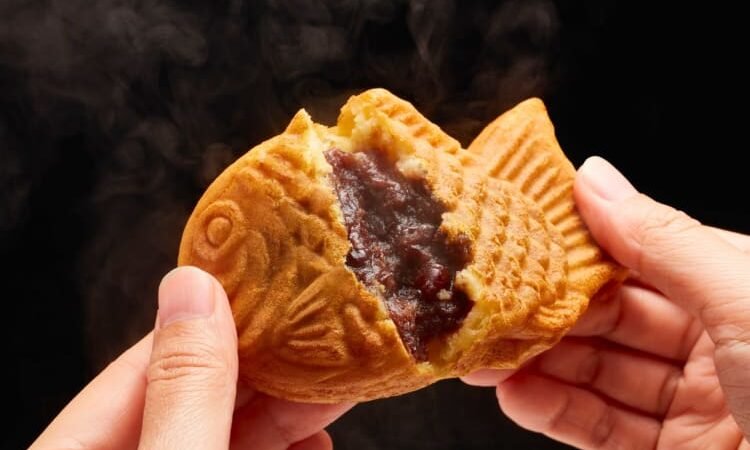
What is bungeoppang? Bungeoppang (붕어빵) is a beloved Korean street snack: a warm, fish-shaped pastry with a golden, lightly crisp shell and a sweet filling, traditionally red bean paste. It looks like a fish but does not contain fish. If you’re visiting Seoul in autumn or winter, finding a freshly baked bungeoppang stall is one of the simplest ways to experience local snack culture.
This 2026 guide covers what it tastes like, red bean versus custard, where to find it in Seoul, how much to budget, and what to say when ordering.
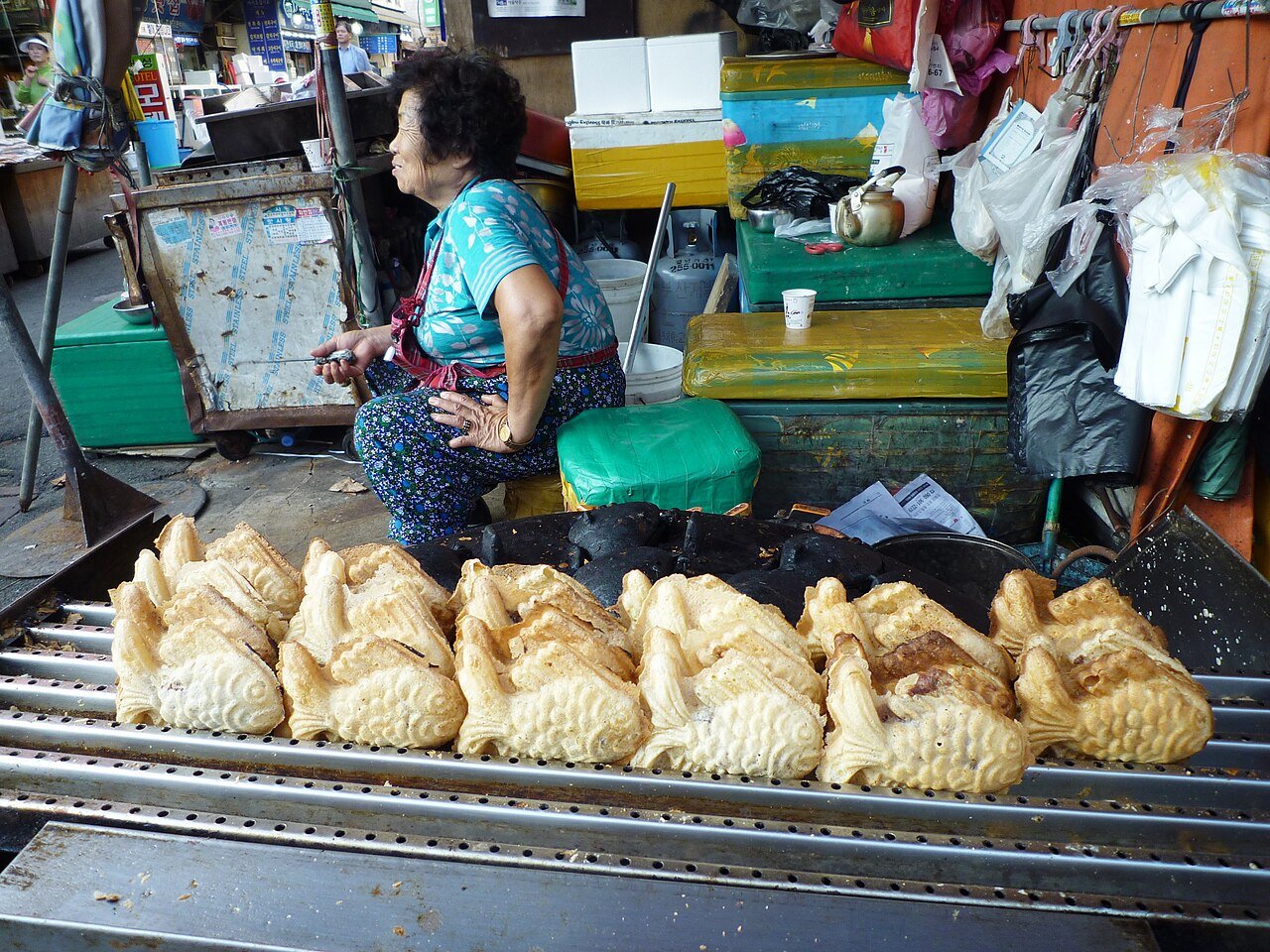
What does bungeoppang taste like?
Imagine a thin, golden pancake or waffle-like cake with a hot, sweet center. The edges can be crisp when fresh, while the thicker middle stays soft. Traditional pat bungeoppang (팥붕어빵) contains sweetened red bean paste. The filling tastes mildly earthy, sweet and smooth rather than savory.
Another popular choice is shu-cream bungeoppang (슈크림붕어빵), filled with a soft, sweet custard-style cream. If you don’t like red beans, this is a good place to start.
Why is Korean bungeoppang shaped like a fish?
“Bungeo” (붕어) means crucian carp, and “ppang” (빵) means bread. The batter is poured into hinged fish-shaped metal molds, filled, closed and baked until golden. The fish shape is decorative, not a clue that the pastry contains seafood.
Red bean vs. custard bungeoppang: which is better?
- Red bean (팥): the traditional Korean flavor. Sweet, nutty and comforting.
- Custard (슈크림): creamy and sweeter, similar to vanilla pastry cream.
- Chocolate, cheese and other fillings: some vendors sell creative variations, but availability differs by stall.
The Korea Tourism Organization notes that red bean and custard are both popular, and some shops sell varieties with chocolate, cheese or even pizza-style fillings. Try one of each if you can. See VISITKOREA’s winter snack guide.
Where to find bungeoppang in Seoul
Bungeoppang is seasonal. Many street stalls appear during cooler months, but locations, hours and availability change. A vendor that was there last winter may not be operating today. The most useful approach is to search a Korean map app and look around busy markets, transit exits and shopping streets.
Gwangjang Market area
The Korea Tourism Organization highlights the area around Gwangjang Market (광장시장) as a popular winter food destination. Explore the surrounding streets, but do not assume a particular stall will always be open.
Namyeong-dong and Hyochang Park
VISITKOREA also identifies Namyeong-dong (남영동) and the area near Hyochang Park (효창공원) among places known for bungeoppang. Check current maps and opening information before making a dedicated trip.
Neighborhood street stalls and bakeries
Many locals buy bungeoppang from small temporary stands near subway stations and residential shopping streets. Some bakeries and dessert shops offer fish-shaped pastries year-round, although these may differ from the traditional street-stall version.
How to search for bungeoppang on Naver Map
- Open Naver Map or KakaoMap.
- Search 붕어빵 (bungeoppang) or 붕어빵 가게 (bungeoppang shop).
- Check recent reviews, photos and operating hours.
- Remember that small temporary carts may not have permanent map listings.
- Look for visible fish-shaped molds or signs reading 붕어빵.
How much does bungeoppang cost in 2026?
There is no single nationwide price. Vendors may charge by piece or offer bundles such as two or three pieces for a set price. Prices depend on neighborhood, size, filling and inflation, so check the handwritten price sign at the stall. Ask “하나에 얼마예요?” (Hana-e eolmayeyo?) — “How much for one?”
Some small stalls prefer cash or local mobile payment. Carrying a little Korean won can be useful, but payment options vary by vendor.
How to order bungeoppang in Korean
- 붕어빵 두 개 주세요. — Bungeoppang du gae juseyo. — Two bungeoppang, please.
- 팥붕어빵 하나 주세요. — Pat bungeoppang hana juseyo. — One red bean bungeoppang, please.
- 슈크림붕어빵 있어요? — Syukeurim bungeoppang isseoyo? — Do you have custard bungeoppang?
- 하나에 얼마예요? — Hana-e eolmayeyo? — How much is one?
- 카드 돼요? — Kadeu dwaeyo? — Can I pay by card?
When is bungeoppang season in Korea?
The classic season is late autumn through winter, when warm street food is especially appealing. Some dedicated shops operate outside winter. Because weather and vendor schedules vary, there is no guaranteed start or end date each year.
Is bungeoppang vegan, halal or gluten-free?
Do not assume it meets a specific diet. Batter commonly contains wheat flour and may contain eggs or milk. Custard fillings often contain dairy or egg. Cross-contact with other ingredients is possible, and recipes differ between stalls. Ask the vendor about the specific batter and filling if you have allergies or dietary requirements.
Does bungeoppang contain actual fish?
No. Standard bungeoppang is a sweet pastry shaped like a fish, not a fish dish. However, do not use the shape alone to rule out allergens or other ingredients in specialty versions.
Bungeoppang vs. taiyaki: are they the same?
Bungeoppang is related to Japan’s taiyaki, another fish-shaped filled cake. They share a recognizable concept but can differ in batter, texture, size and local fillings. In Korea, bungeoppang is especially associated with winter street stalls and the red bean-versus-custard debate.
Bungeoppang vs. hodugwaja: which Korean snack should you try?
Both are molded Korean pastries, but they are not the same. Bungeoppang is shaped like a fish, often has a crisp thin shell and is commonly sold warm at street stalls. Hodugwaja is walnut-shaped, traditionally contains red bean paste plus walnuts and is especially associated with Cheonan and highway rest stops.
For the full explanation, read our guide to Korean hodugwaja walnut cakes.
Bungeoppang vs. hotteok
Another famous Korean winter snack is hotteok (호떡), a pan-fried filled pancake often made with brown sugar, cinnamon and nuts. Choose bungeoppang if you want a lighter cake-like pastry; choose hotteok if you prefer a chewy pancake with a hot, syrupy center. Be careful with either straight off the grill, as the filling can be very hot.
FAQ: Korean fish-shaped pastry
What is bungeoppang in English?
It is often translated as Korean fish-shaped pastry or fish-shaped bread.
What is inside bungeoppang?
Traditionally sweet red bean paste; custard and other fillings are also common.
Can I find bungeoppang in Seoul in summer?
Possibly at dedicated shops, but temporary street vendors are much more associated with colder months.
Is bungeoppang spicy?
Traditional bungeoppang is sweet, not spicy.
Where should first-time visitors try it?
Start with a winter market area or a stall near a subway station, and check recent local listings before traveling.
Explore more Korean snacks
Discover more in KriMind’s Korean food guides, including hodugwaja, Subak Bar and Jaws Bar.
Plan your Korea food itinerary
Want help planning a Korean street food route or a personalized Seoul itinerary? Contact KriMind for independent travel planning assistance.
WhatsApp: +1 706-923-8947

KriMind is an independent travel planning service. Service scope and fees are confirmed individually.
Get Korean food discoveries by email
Subscribe to KriMind for Korean snacks, food culture and first-time Korea travel guides.
Keep exploring Korea: related guides
These practical KriMind guides are worth reading next:
- Hodugwaja vs. bungeoppang: which Korean pastry should you try? →
- Can you eat Korean BBQ alone? A practical solo-dining guide →
- Try another iconic Korean snack: watermelon Subak Bar →
Sources and image credits: Korea Tourism Organization: Fish-Shaped Bun; VISITKOREA: Winter K-Snacks; Korea.net: Popular Korean Street Snacks. Featured photo: Cozymeal Korean street food guide (reuse permission not independently verified); body photo: Joriola / Wikimedia Commons. Follow the license terms listed on each source file. Updated October 2026.
