
PDRN has moved from Korean aesthetic clinics into serums, creams and masks—and into the center of the 2026 K-beauty conversation. But the ingredient has a translation problem: evidence for injected PDRN or polynucleotides cannot simply be copied onto a cosmetic serum. Here is what PDRN is, what topical research actually shows, and what to ignore when the marketing gets ahead of the science.
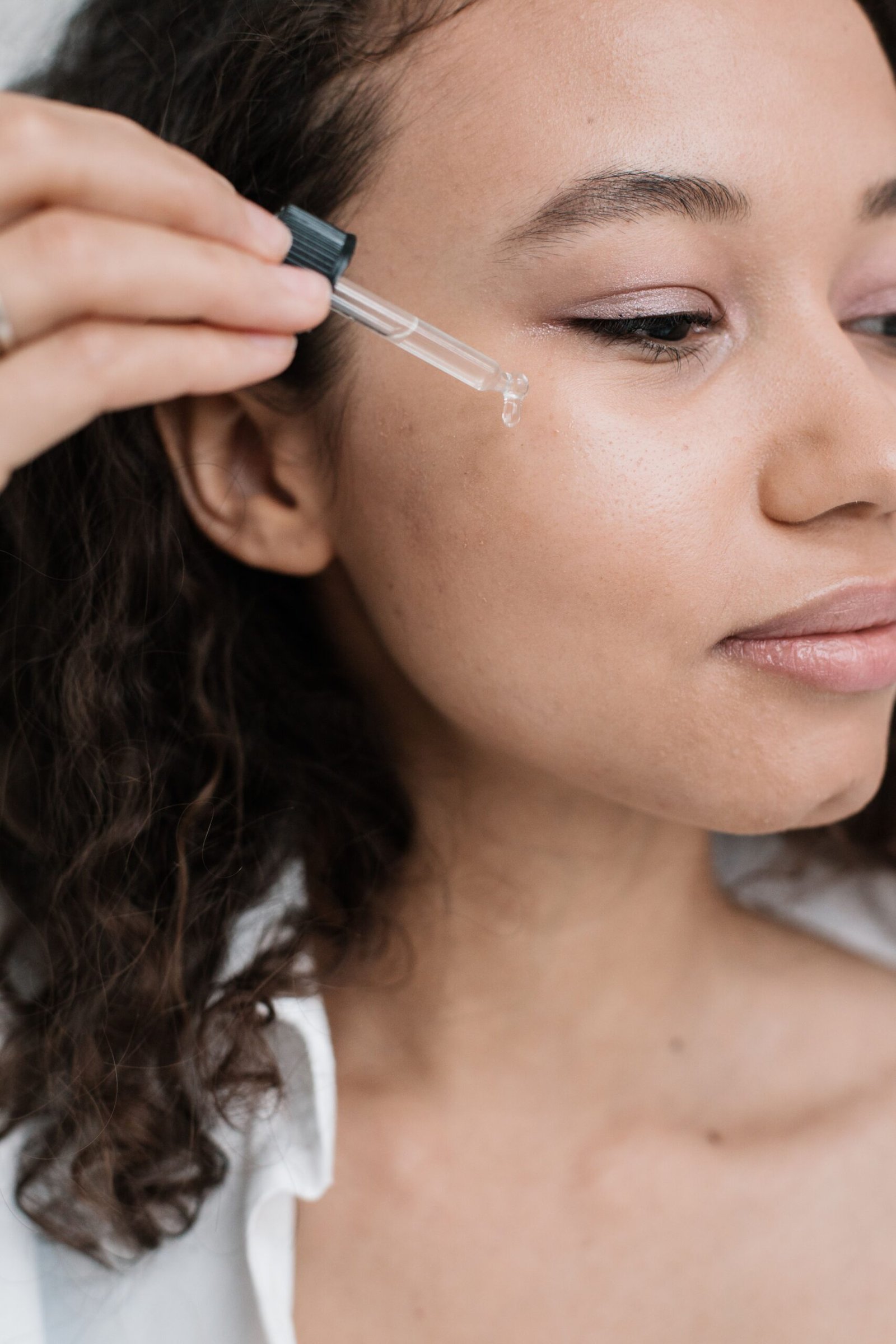
The short answer: PDRN is a mixture of DNA fragments used in regenerative medicine and increasingly in skincare. Early evidence is promising for repair-related pathways and photoaged skin, but the clinical evidence base remains small and highly formulation-specific. A PDRN cream is not a “salmon DNA injection in a bottle.”
What exactly is PDRN?
PDRN stands for polydeoxyribonucleotide. In dermatology literature, it refers to DNA-derived fragments rather than one single, standardized cosmetic molecule. PDRN and the related term PN (polynucleotide) are often grouped together in beauty conversations, but they are not technically identical: a 2025 scientific review describes PN as generally containing longer DNA fragments, while PDRN contains relatively shorter sequences and has been studied for pathways including adenosine A2A-receptor signaling and nucleotide salvage.
Traditionally, much of the PDRN literature has involved material derived from salmonid DNA. Newer plant-derived and other animal-free preparations are emerging, but a 2026 review cautions that the evidence for plant-derived versions is still predominantly preclinical and should not automatically be treated as clinically equivalent to conventional PDRN.
Why is PDRN suddenly everywhere in K-beauty?
K-beauty in 2026 is increasingly borrowing the language—and sometimes the ingredients—of Korean aesthetic medicine. Vogue’s 2026 K-beauty trend report places PDRN creams alongside exosomes, microneedle-style serums and other high-tech skincare, while describing a broader shift toward “slow aging,” skin quality and treatment-inspired formulas. That helps explain the appeal: PDRN sits neatly at the intersection of clinical-sounding science, Korean beauty culture and the consumer obsession with repair.
Korean retail data had already hinted at the shift. CJ Olive Young reported a sharp increase in PDRN searches during a 2025 sale, part of what it called “ingredient beauty”—shopping by a hero ingredient rather than only by brand or product category. For a practical shopping-focused version of this topic, read KriMind’s Olive Young PDRN skincare guide for beginners.
Does topical PDRN actually work?
There is now human evidence for at least one topical formulation, but it is far too early to generalize that result to every PDRN serum. A 2026 randomized, double-blind split-face study evaluated a specific 0.1% medium-length PDRN eye cream over 28 days. The researchers reported improvements in periocular wrinkles and several skin measurements compared with a 0.1% retinol comparator, alongside laboratory and skin-model evidence related to extracellular-matrix repair.
That is noteworthy because one of the biggest questions around topical PDRN has been delivery: DNA fragments are not automatically guaranteed to reach biologically relevant layers simply because they appear on an ingredient list. The same study investigated penetration of its particular PDRN preparation. But one successful formulation does not prove that every molecular weight, concentration, delivery system or finished cosmetic behaves the same way.
What does the broader evidence say?
A 2026 systematic review of randomized trials involving PN and PDRN found only seven eligible trials with 183 participants across skin rejuvenation, scar prevention and wound healing. The review found encouraging outcomes, particularly for wound healing, but emphasized small sample sizes, heterogeneous protocols and variable outcomes. Another 2026 dermatology systematic review similarly concluded that the field is growing rapidly while the quality and consistency of evidence still need improvement.
So the evidence is neither “PDRN is fake” nor “PDRN is proven to regenerate your face.” The more accurate position is: biologically plausible, increasingly studied, promising in selected formulations and procedures, but not yet a universal verdict on the PDRN skincare category.
PDRN serum vs. PDRN injection: the distinction that matters most
| Topical PDRN skincare | Professional PDRN/PN procedures | |
|---|---|---|
| How it is used | Applied to the skin as a cosmetic | Delivered through a medical/aesthetic procedure |
| Barrier | Must contend with the skin barrier and formulation delivery | Delivery bypasses the surface barrier |
| Evidence | Emerging and formulation-specific | Larger historical evidence base, though still limited and heterogeneous |
| What you can infer | Only claims supported for that finished formula | Results cannot be transferred directly to a cream or serum |
This is the marketing shortcut worth resisting. A cosmetic can contain an ingredient also used in medical settings without reproducing the dose, delivery, pharmacology or outcome of a procedure. If a product page leans heavily on injection studies without showing evidence for its topical formulation, read the claim cautiously.
Is PDRN really “salmon sperm”?
The internet shorthand is crude but comes from a real source story. Conventional PDRN has commonly been produced from purified salmonid DNA, including reproductive tissue. What goes into a finished formulation is a processed DNA-derived material—not raw biological fluid. At the same time, plant-derived PDRN/PN is now being investigated, so “all PDRN is salmon-derived” is no longer a safe assumption. If source matters to you for allergy, ethical or vegan reasons, check the individual manufacturer’s documentation rather than guessing from the word PDRN.
How should you shop for a PDRN serum or cream?
Ignore the front label for a moment. First ask what the product is supposed to do in your routine. Then look at the finished formula, product type, supporting ingredients, source information, concentration claim and whether the brand explains what that concentration actually represents. A larger headline number is not automatically a more effective product if two brands are measuring different raw materials or complexes.
For most people, PDRN makes more sense as an optional treatment step than as a reason to dismantle a routine that already works. Sunscreen, gentle cleansing and a moisturizer suited to your skin remain more foundational. If your goal is preventative “slow aging,” see KriMind’s Korean slow-aging skincare guide. If your skin is reactive or dry, start with our dry and sensitive skin guide.
What should make you skeptical?
- “Same as an injection” language. Topical and injected delivery are fundamentally different.
- Huge percentages with no definition. Ask what the number refers to.
- Universal regeneration claims. Evidence for one preparation does not validate every product.
- Plant PDRN presented as already equivalent to conventional PDRN. Current reviews say direct comparative evidence is limited.
- Before-and-after photos standing in for controlled evidence. They can be useful context, not proof on their own.
The KriMind verdict
PDRN deserves more than either hype or dismissal. It is one of the more interesting examples of how Korean beauty is translating regenerative-medicine ideas into consumer skincare, and 2026 research makes the topical story more credible than it was even a year ago. But this is still a category where the exact formulation matters more than the trend name. Treat PDRN as an ingredient worth watching—not a magic word that makes every serum clinically proven.
PDRN skincare FAQ
What does PDRN stand for?
Polydeoxyribonucleotide, a DNA-derived material made up of deoxyribonucleotide fragments.
Is PDRN the same as PN?
No. The terms are sometimes blurred in beauty marketing, but scientific literature distinguishes them partly by fragment length and molecular characteristics.
Can PDRN skincare replace retinol?
There is not enough evidence to make that broad recommendation. One 2026 trial compared a specific topical PDRN formulation with retinol, but that result should not be generalized to every product or every skin goal.
Is topical PDRN the same as a PDRN injection?
No. Route of delivery, formulation and evidence are different. Results from injectable treatment should not automatically be attributed to a cosmetic.
Is all PDRN made from salmon?
No. Salmon-derived PDRN is conventional and widely studied, but plant-derived preparations are emerging. Evidence for newer sources is not yet necessarily equivalent.
Can sensitive skin use PDRN?
Skin tolerance depends on the complete formulation, not the hero ingredient alone. Patch-test when appropriate and introduce one new product at a time. Seek professional advice for persistent irritation or a known allergy.
Want more detailed KriMind guidance?
Subscribe by email for deeper K-beauty guides connected to what you are reading now. Subscribers can also send us follow-up questions for personalized 1:1 guidance.
Enter your email below to join KriMind.
Sources & further reading
Evidence reviewed: Ye et al., PLOS One (2026), topical medium-length PDRN in photodamaged skin; a 2026 systematic review of randomized PN/PDRN trials; 2025 review comparing PN and PDRN; 2026 review of plant-derived PN/PDRN; and Vogue’s 2026 K-beauty trend report. This article is educational and is not medical advice.