
For years, “glass skin” was the phrase that translated K-beauty to the world. In 2026, the more useful idea is happening underneath the shine: protect the barrier first. The Korean barrier-repair routine is less about piling on ten products and more about reducing irritation, restoring water and lipids, and choosing formulas your skin can tolerate consistently.
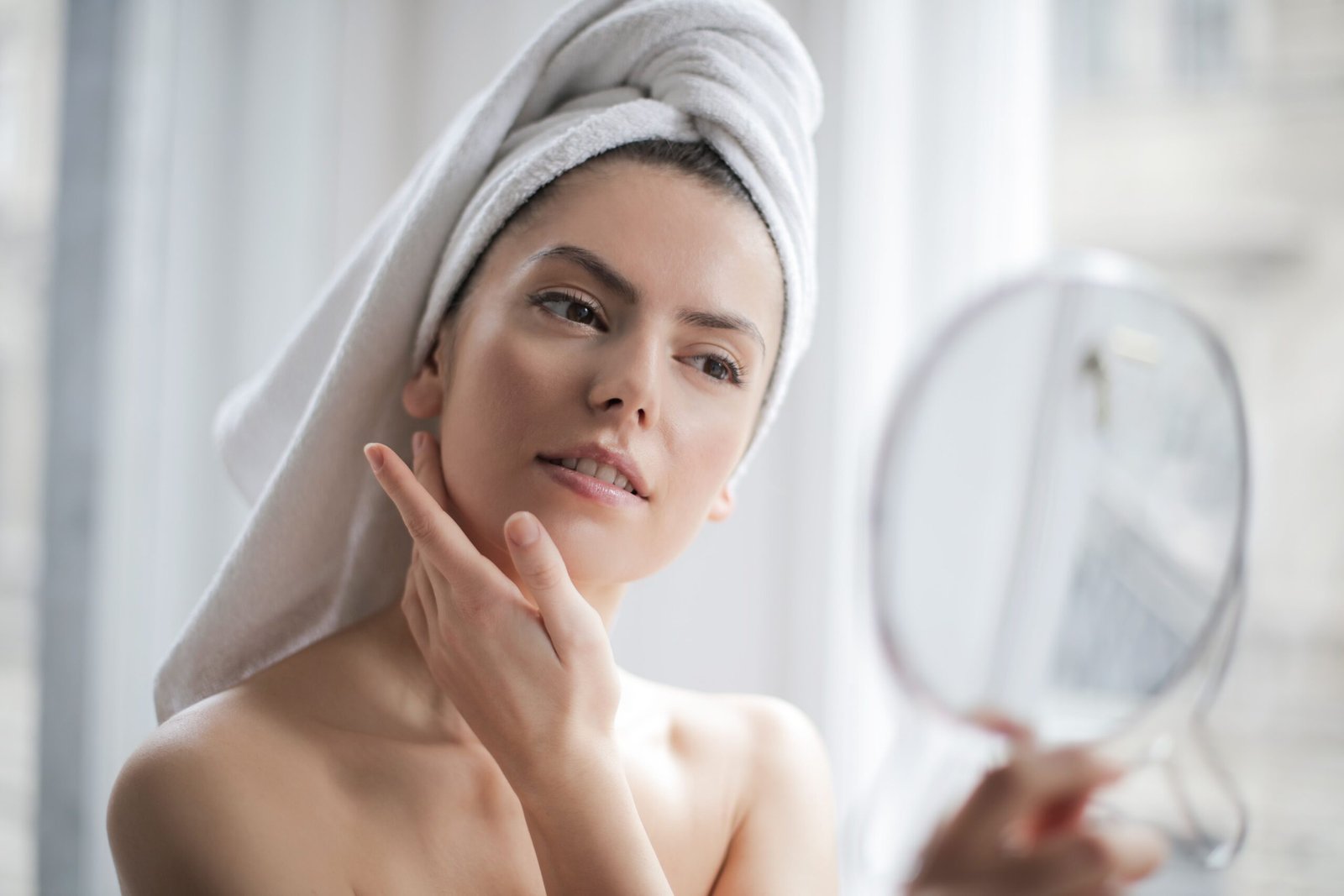
The short answer: your skin barrier is the outermost protective layer of the epidermis. When it is disrupted, water escapes more easily and irritants can penetrate more readily. A barrier-repair routine therefore prioritizes gentle cleansing, hydration, lipid-rich moisturization and daily sun protection while temporarily reducing unnecessary irritation.
Why K-beauty is moving beyond “glass skin”
Glass skin was visually irresistible: smooth, reflective, almost translucent-looking skin that photographed beautifully. But a finish is not a diagnosis. Skin can look glossy because of skincare, makeup or lighting while still being irritated underneath. The newer K-beauty conversation is more interested in skin quality—comfort, hydration, resilience and a healthy-looking surface over time.
That fits the broader 2026 shift toward “slow aging,” treatment-inspired skincare and barrier-conscious routines. Instead of asking only “How do I glow tonight?”, consumers are increasingly asking “How do I keep my skin functioning well?” That is a better question.
What is the skin barrier, exactly?
The term usually refers to the stratum corneum, the outermost layer of the epidermis. A classic way to picture it is “bricks and mortar”: corneocytes act like bricks, while intercellular lipids—including ceramides, cholesterol and fatty acids—help form the mortar around them. Together they limit excessive water loss and help protect the body from the outside environment.
This is why barrier care is not merely a beauty trend. Dermatology research has long linked disruption of this system with increased transepidermal water loss and inflammatory skin conditions. Cosmetics cannot treat every underlying condition, but routine design can avoid making an already unhappy barrier work harder.
How can you tell when your barrier may be struggling?
- Products that used to feel comfortable suddenly sting.
- Skin feels tight after cleansing even when it looks oily later.
- Persistent flaking, roughness or unusual sensitivity appears.
- Your face becomes red or uncomfortable after adding several actives.
- You keep exfoliating because texture looks worse—and the texture keeps getting worse.
Those signs are not specific enough to diagnose a medical condition. Persistent, painful or severe symptoms deserve professional evaluation. But they are good reasons to simplify rather than immediately buying another active.
The Korean barrier-repair routine, simplified
| Step | What matters | What to avoid overdoing |
|---|---|---|
| 1. Cleanse | Gentle cleansing appropriate to your skin and what you need to remove | Harsh cleansing just to achieve a “squeaky” feeling |
| 2. Hydrate | A simple toner, essence or serum if it improves comfort | Stacking many products only because a routine says you need them |
| 3. Moisturize | Humectants plus emollient/occlusive support; barrier lipids can be useful | Assuming the most expensive cream repairs fastest |
| 4. Protect | Broad-spectrum sunscreen during the day | Using recovery products while ignoring UV exposure |
Do you need 10 steps?
No. Barrier-first skincare is almost the opposite of collecting steps. If your skin is irritated, a cleanser, moisturizer and sunscreen may be a more intelligent routine than a shelf full of essences and actives. Optional hydrating layers can be added because they improve your skin’s comfort—not because “Korean skincare” requires them.
Which ingredients make sense for barrier support?
Ceramides are among the most recognizable because they are naturally important components of the stratum corneum’s lipid matrix. But formulation matters: barrier lipids work as a system, and simply printing “ceramide” on a jar does not tell you how well the finished product will perform.
Glycerin and other humectants help support hydration; emollients and occlusives can reduce the feeling of dryness and help limit water loss. Soothing ingredients such as panthenol or centella-derived components may appear in Korean barrier formulas, but again, the finished formula and your tolerance matter more than chasing a single hero ingredient.
What about retinol, acids and vitamin C?
You do not have to declare war on active ingredients forever. The point is to match intensity to tolerance. If skin is actively stinging, peeling or reacting, adding more exfoliation because you want faster results can become a loop. Simplifying temporarily and reintroducing products carefully makes it easier to identify what your skin actually tolerates.
If you are building a preventative routine rather than recovering from irritation, KriMind’s Korean slow-aging skincare guide explains the broader “slow aging” approach. For reactive skin, see our Olive Young dry and sensitive skin guide.
Where does PDRN fit?
PDRN is one of the ingredients driving the current treatment-inspired K-beauty conversation, but it is not the foundation of barrier care. A trendy serum cannot compensate for a routine that repeatedly irritates your skin. If you are curious about the evidence, our new PDRN skincare evidence guide separates topical cosmetics from professional PDRN/PN procedures.
The biggest barrier-repair mistakes
- Exfoliating the flakes. Visible roughness does not always mean your skin needs another acid.
- Changing five products at once. You lose the ability to identify what helped or hurt.
- Buying only by hero ingredient. Finished formulation matters.
- Confusing glow with health. Reflective skin is an aesthetic result, not proof of barrier function.
- Ignoring sunscreen. Barrier-conscious skincare still needs daytime UV protection.
The KriMind verdict: healthy-looking skin before glass skin
The most useful evolution in K-beauty may be psychological: stop treating skin as a surface to polish and start treating it as an organ with a barrier to protect. You can still want glow. You can still enjoy essences, serums and beautifully designed Korean formulas. But the hierarchy changes: comfort first, function first, consistency first—then shine.
Korean barrier-repair FAQ
How long does a damaged skin barrier take to repair?
There is no universal countdown. Recovery depends on the cause, severity, skin condition and what continues to irritate it. If symptoms are persistent or severe, seek medical advice rather than waiting for a cosmetic routine to solve them.
Do I need a Korean product to repair my barrier?
No. Barrier biology is not country-specific. Korean beauty is useful here because the market offers many hydration- and barrier-focused formulas, not because only Korean products can support the barrier.
Are ceramides necessary?
They can be useful components of barrier-supportive formulations, but no single ingredient is mandatory for everyone.
Should I stop exfoliating?
If exfoliation is contributing to irritation, reducing or pausing it can be sensible. Your individual needs depend on your skin and any underlying condition.
Is glass skin bad for your barrier?
No. “Glass skin” describes an appearance. The problem is chasing that appearance through excessive cleansing, exfoliation or product layering when your skin is already irritated.
Can oily skin have a compromised barrier?
Yes. Oiliness does not automatically mean the skin is adequately hydrated or that its barrier is functioning optimally.
Want more detailed KriMind guidance?
Subscribe by email for deeper K-beauty guides connected to what you are reading now. Subscribers can also send us follow-up questions for personalized 1:1 guidance.
Enter your email below to join KriMind.
Sources & further reading
For the underlying skin-barrier science, see peer-reviewed reviews on epidermal barrier structure and function and ceramides and skin barrier function. For the current beauty context, see Vogue’s 2026 K-beauty trend report. This article is educational and is not medical advice.